
Coastal vs Central Portuguese Camino: Which Walking Tour Is Right for You?
One of the first decisions you’ll face when planning a Portuguese Camino walking holiday is whether to follow the Coastal Route or the Central Route.
Many walkers assume they’re choosing between two completely different pilgrimages, but that’s not quite the case. The two routes follow different paths through Portugal before joining near Redondela in Galicia. From there, all pilgrims continue along the same Camino towards Santiago de Compostela.
Your choice therefore comes down to how you want to experience the Portuguese section of the journey.
Starting from Porto, the Coastal Route takes you through seaside towns such as Vila do Conde, Viana do Castelo and Caminha, with long stretches beside the Atlantic Ocean and a memorable boat crossing over the Minho River into Spain. The Central Route follows the historic pilgrimage corridor through Ponte de Lima, the Serra da Labruja, Valença and Tui, offering a stronger sense of the Camino’s medieval heritage and some of its most iconic inland landscapes.
Both routes eventually lead to Santiago, but the experiences along the way are remarkably different. Here’s what you can expect from each.
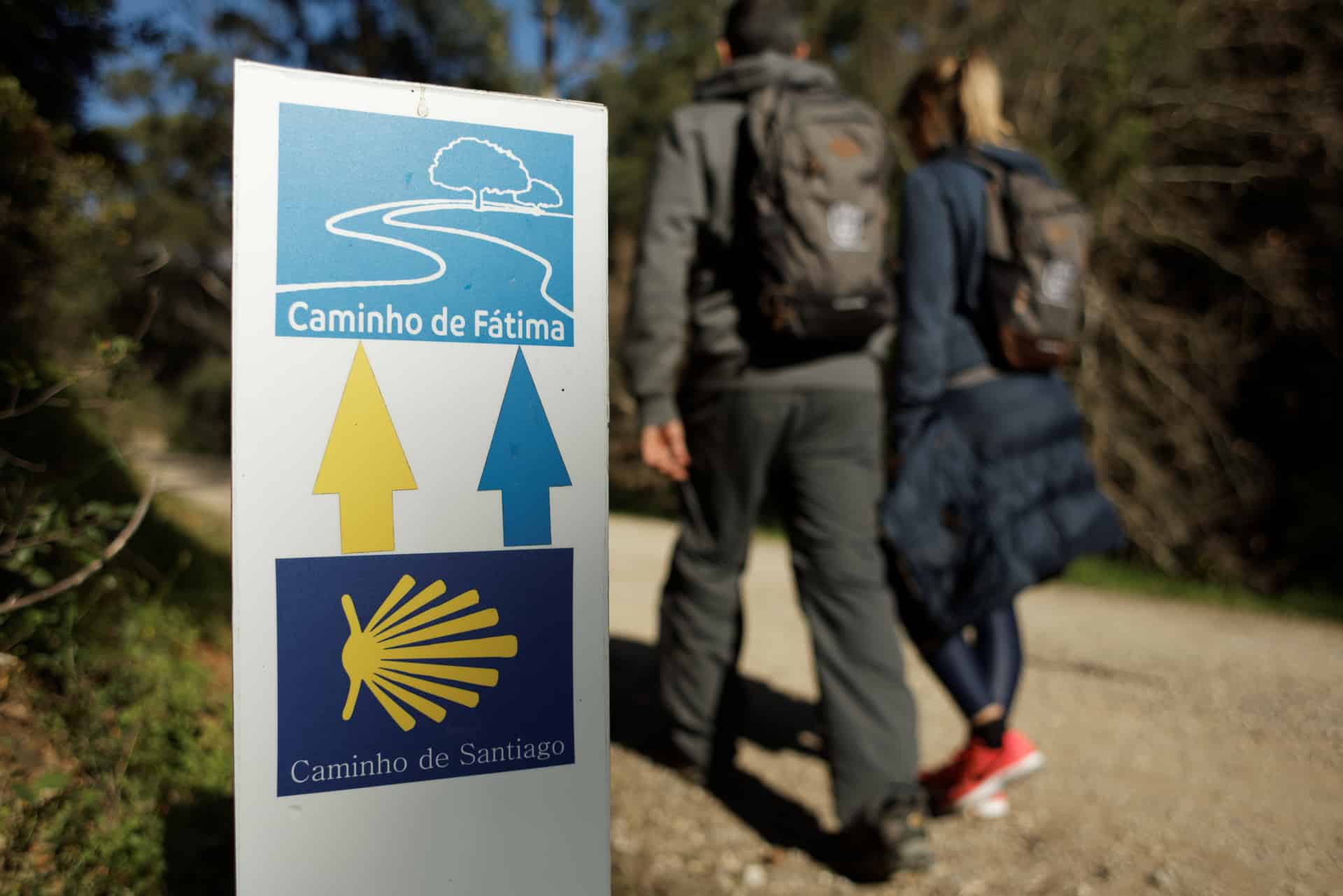
Hiking the Portuguese Camino – the Coastal and Central routes
The Coastal Portuguese Camino – Atlantic scenery, coastal villages and seaside towns
The Coastal Camino stays close to the Atlantic Ocean for much of its Portuguese section, creating a journey that feels as much like a coastal walking holiday as a pilgrimage.
Leaving Porto behind, walkers soon reach Vila do Conde, one of the most attractive historic towns on Portugal’s northern coast. The route follows the waterfront and passes traditional fishing communities that still maintain a strong connection to the sea.
Further north, the trail crosses the dunes and beaches of Ofir, one of the most beautiful natural stretches on the entire Portuguese Camino. Wooden boardwalks, pine forests and Atlantic views accompany much of the walk.
Many pilgrims consider Viana do Castelo one of the highlights of the entire route. Its historic centre, riverside setting and views from the hilltop sanctuary create one of the most memorable overnight stops before entering the Minho region.
Near the border, the route reaches Caminha, a charming fortified town overlooking the Minho River.
One of the most distinctive moments of the Coastal Camino comes here: crossing the river by boat into Spain. Unlike the Central Route, which crosses over a bridge, Coastal Camino pilgrims arrive in Galicia by water, creating a memorable transition between Portugal and Spain.
The Spanish section continues through A Guarda, Baiona and Vigo.
Walking into Baiona, where the news of Columbus’s discovery of America first arrived in Europe, is a highlight for many travellers. Later, the route follows the shores of the spectacular Ría de Vigo, combining coastal scenery with vibrant Galician culture.
The Coastal Camino is ideal for walkers who enjoy:
- Atlantic landscapes
- Coastal towns and fishing villages
- Beaches and boardwalks
- Maritime culture
- A walking holiday atmosphere alongside the Camino experience
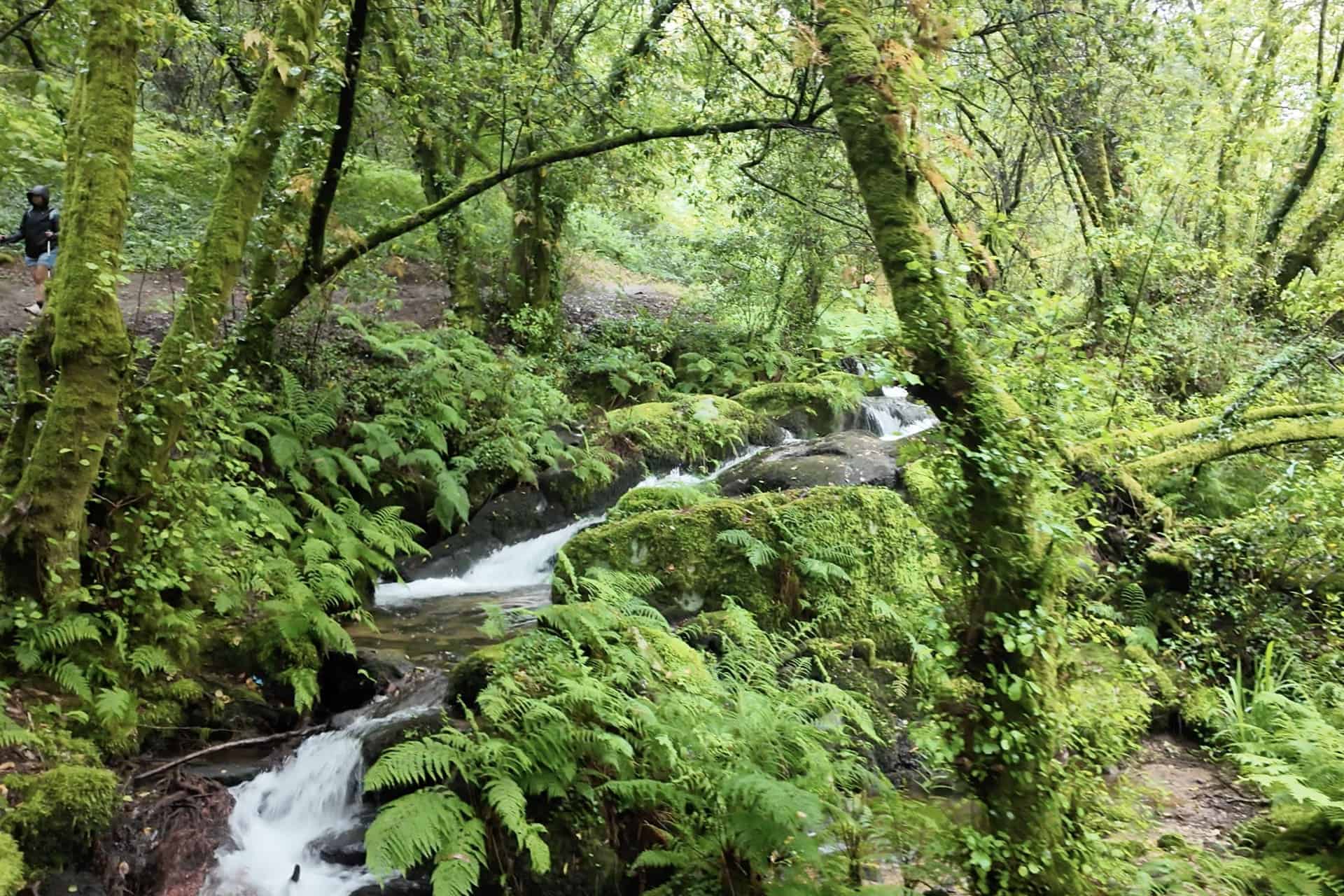
The Central Portuguese Camino
The Central Camino follows the historic pilgrimage route that has connected Portugal to Santiago de Compostela for centuries. While the Coastal Route is defined by the Atlantic Ocean, the Central Route is shaped by medieval towns, vineyards, forests and ancient pilgrim paths.
One of the first major highlights is Ponte de Lima, often regarded as one of Portugal’s most beautiful small towns. Its medieval bridge, riverside setting and historic centre create one of the most atmospheric stops on the entire Camino.
Shortly after Ponte de Lima comes what many walkers consider the most physically demanding section of the Portuguese Camino: the climb through the Serra da Labruja.
The ascent rewards walkers with forest trails, mountain scenery and a sense of accomplishment largely absent from the flatter Coastal Route. For many pilgrims, this stage feels closest to the traditional image of a long-distance Camino journey.
Further north, the route reaches the impressive fortress town of Valença, whose massive defensive walls overlook the Minho River and the Spanish town of Tui.
Unlike Coastal pilgrims, walkers on the Central Route enter Spain via the historic bridge connecting Valença and Tui. Arriving in Tui, with its cathedral dominating the skyline, is often described as one of the defining moments of the entire pilgrimage.
The route then continues through Galicia before joining the Coastal Camino near Redondela.
The Central Camino is ideal for walkers who enjoy:
- Historic towns and architecture
- Pilgrimage heritage
- Medieval sites
- Rural landscapes
- More challenging walking stages
Where Do the Routes Join?
This is an important point that many first-time Camino walkers don’t realize.
The Coastal and Central Portuguese Caminos become a single route in Redondela, in Galicia.
From there, everyone follows the same path through:
- Redondela
- Pontevedra
- Caldas de Reis
- Padrón
- Santiago de Compostela
This means that all pilgrims experience the same final stages through Galicia, including Pontevedra, Caldas de Reis, Padrón and Santiago de Compostela. The choice between the Coastal and Central routes is really about how you want to spend the first part of your journey between Porto and Redondela.
Which Route Is More Scenic?
This depends entirely on what you enjoy.
Choose the Coastal Route if you love:
- Ocean views
- Beaches
- Coastal villages
- Open horizons
- Atlantic landscapesChoose the Central Route if you love:
- Historic towns
- Vineyards
- Medieval architecture
- Rural countryside
- Pilgrimage heritage
Both routes are beautiful, but they offer very different scenery.
Which Route Is Easier?
In general, the Coastal Route is often perceived as slightly easier because much of the terrain is relatively flat.
The Central Route includes more rolling countryside and occasional climbs, although it remains accessible to most active walkers with a reasonable level of fitness.
Neither route is considered particularly demanding compared with many long-distance hiking trails in Europe.
The biggest difference comes around the Serra da Labruja on the Central Route. While neither route is technically difficult, the climb after Ponte de Lima is one of the most demanding stages on the Portuguese Camino. The Coastal Route generally offers gentler terrain and fewer sustained ascents.
Which Route Has More Pilgrim Atmosphere?
The Central Route wins here.
As the traditional Portuguese Camino, it attracts more pilgrims and offers a stronger sense of the Camino’s spiritual and historical heritage.
If meeting fellow walkers and experiencing the classic pilgrimage atmosphere is important to you, the Central Route may be the better choice.
Coastal or Central: Our Recommendation
Choose the Coastal Portuguese Camino if you dream of Atlantic views, seaside towns and a walking holiday that combines nature, culture and relaxation.
Choose the Central Portuguese Camino if you want a more traditional pilgrimage experience, historic villages and a deeper connection to the Camino’s heritage.
Whichever route you choose, you’ll experience the warm hospitality, rich culture and unforgettable landscapes that make the Portuguese Camino one of Europe’s most rewarding long-distance walks.
Ready to start planning? Explore our Portuguese Camino walking tours to find the itinerary that best matches your interests, fitness level and travel style.
Related Portuguese Camino Guides
Portuguese Camino vs French Camino: Which Route Is Best for You?
When Is the Best Time to Walk the Portuguese Camino?
How Difficult Is the Portuguese Camino?
Self-Guided vs Guided Portuguese Camino Tours
Portuguese Camino Packing List
How Many Days Do You Need for the Portuguese Camino?
Explore Portuguese Camino Walking Tours
Self-guided Walking Tour on the Portuguese Camino: Last 100km to Santiago de Compostela
Guided Walking Tour in the Portuguese Camino – a taste of the Central, Coastal and Spiritual routes