
Walking in the Azores: the ultimate hiking guide
Few places in Europe offer a walking experience quite like the Azores.
Volcanic crater lakes, green mountain ridges, geothermal valleys, waterfalls and black lava coastlines are packed into an Atlantic archipelago where the landscape can change completely within a single day.
For walkers, that variety is the real attraction. On São Miguel, trails follow crater rims above Sete Cidades, descend through forests towards waterfalls and cross geothermal landscapes around Furnas. On Pico, black volcanic rock, historic vineyards and Portugal’s highest mountain create a very different hiking experience.
At Live Love Hike, we have been designing walking journeys in Portugal for years, and the Azores remain one of the destinations that continues to surprise us. This guide brings together the trails, terrain, weather, islands and practical details we think are most useful when planning a walking trip to the archipelago.
If you are already comparing itineraries, explore our Azores walking tours, including a self-guided walking tour of São Miguel island and our guided walking tour of São Miguel and Pico.
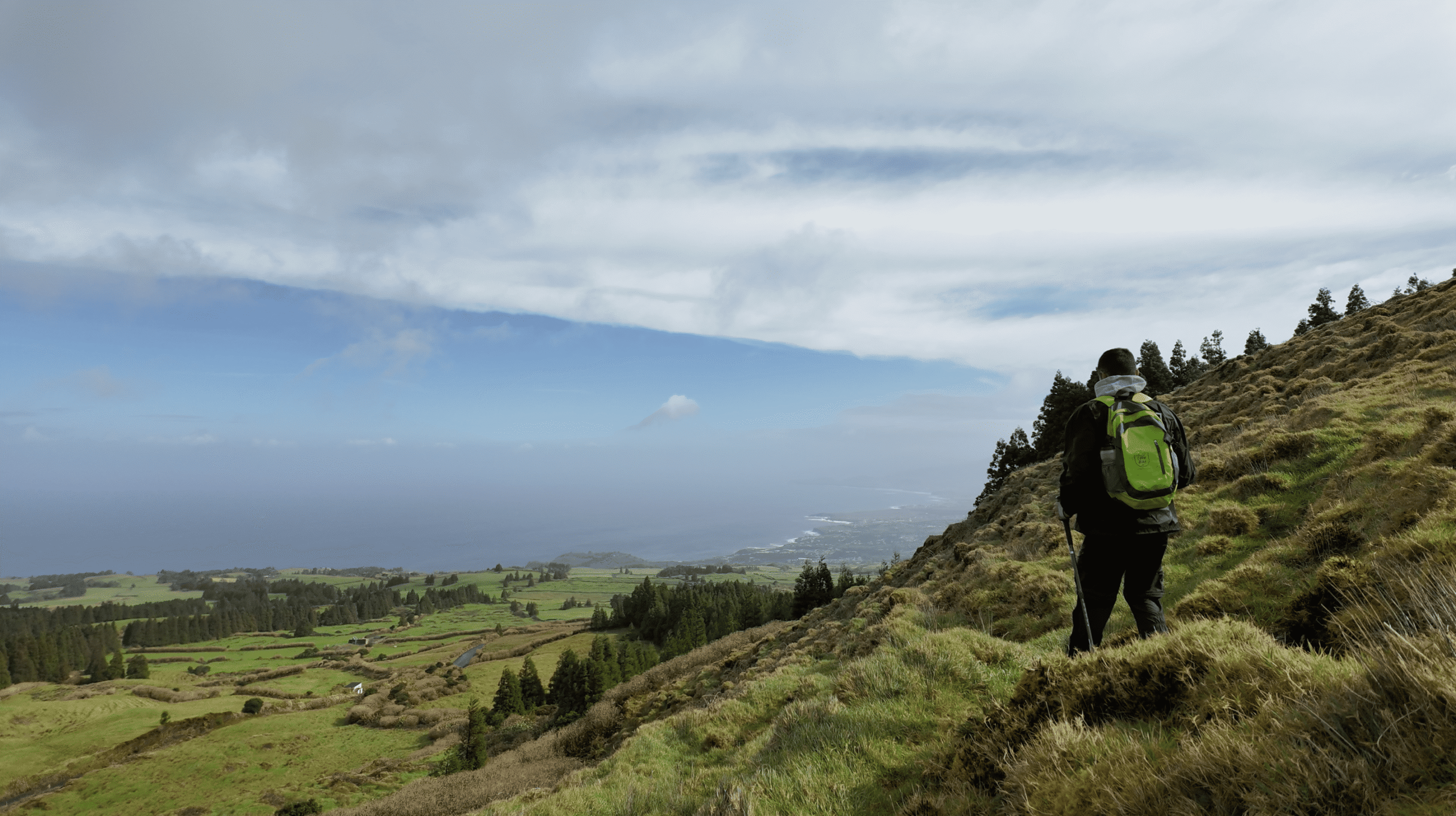
Why walk in the Azores?
The Azores reward walkers because so many different landscapes exist within relatively short distances.
A morning can begin on the rim of a volcanic caldera and end beside the Atlantic. Trails cross green pastures, forests, volcanic gravel, old stone paths and coastal lava fields, while geothermal valleys and crater lakes constantly remind you that these islands are geologically young and still very much shaped by volcanic activity.
The islands also retain a strong sense of place. Outside the best-known viewpoints, many trails remain peaceful, and walking brings you through small communities, agricultural landscapes and places where island life still feels connected to the land and sea.
For us, the Azores work particularly well as a walking destination because the hiking is only part of the day. A trail can finish at a thermal pool, a vineyard, a small restaurant or a coastal village, creating the balance of active travel and local experience that we look for when designing a journey.
Which Azores islands are best for walking?
The Azores are made up of nine volcanic islands, but no two offer exactly the same walking experience. Crater lakes and geothermal valleys define São Miguel, while Pico is shaped by black lava, volcanic vineyards and Portugal’s highest mountain. Terceira combines wild volcanic interiors with history and culture, and islands such as São Jorge, Faial and Flores offer everything from dramatic cliff descents to recent volcanic landscapes and waterfall-covered valleys.
For a first walking holiday in the Azores, São Miguel offers the greatest variety on a single island. If you have more time, combining São Miguel and Pico creates a particularly rewarding contrast between the archipelago’s green and volcanic landscapes.
São Miguel: the best all-round island for walking
At a glance
Suggested stay: 5 to 7 days
Most famous trails: Sete Cidades, Lagoa do Fogo, Salto do Prego and Sanguinho, Furnas, Gorreana
Highlights: Crater lakes, geothermal valleys, forests, waterfalls, tea plantations and thermal pools
Difficulty: Beginner to experienced, depending on the route, elevation and weather
São Miguel is the largest island in the Azores and, for many walkers, the best introduction to the archipelago.
Nicknamed the Green Island, it packs an extraordinary variety of landscapes into a relatively compact area. In the west, the enormous volcanic caldera of Sete Cidades is surrounded by high ridges and the famous Blue and Green lakes. The central part of the island rises towards Lagoa do Fogo, where the walking feels wilder and more exposed, while Furnas reveals another side of the Azores through fumaroles, hot springs and an intensely green geothermal valley.
Further east, the island becomes quieter again. Around Nordeste, Povoação and Faial da Terra, trails descend through forests and river valleys towards waterfalls and small rural settlements. The vegetation can feel almost subtropical, particularly around routes such as Salto do Prego and Sanguinho.
What makes São Miguel so rewarding for walkers is the change in character from one day to the next. You can spend one day walking along a crater rim, another following a forest path to a waterfall, and the next exploring geothermal landscapes before soaking in naturally heated water.
It is also the island we particularly like for independent walking. The range of routes, road connections and accommodation options makes it possible to experience several parts of the island without complicated inter-island logistics.
For most travelers whose main reason for visiting is walking, we would allow at least five days, and ideally a full week. That also gives you some flexibility around the Azores’ famously changeable weather. If cloud is sitting over Sete Cidades one morning, you can walk elsewhere and return when conditions improve rather than forcing the route on the wrong day.
Our self-guided walking tour in São Miguel is built around exactly that idea: freedom over the rhythm of each day, with the routes, transfers, luggage logistics and local support already taken care of.
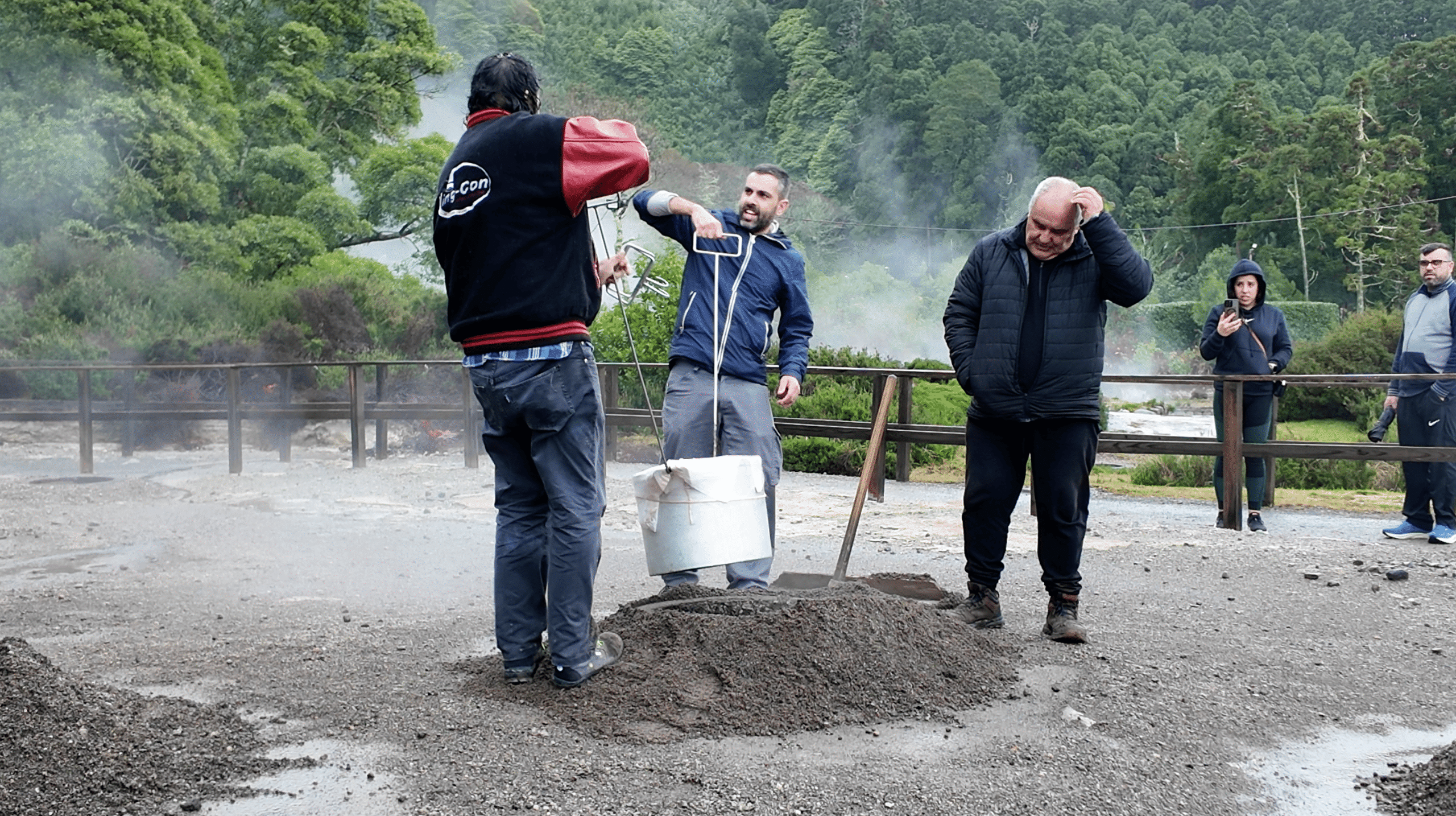
Cozido das Furnas, a traditional Azorean stew slow-cooked underground using the natural heat of Furnas’ volcanic fumaroles.
Pico: lava landscapes, vineyards and Portugal’s highest mountain
At a glance
Suggested stay: 3 to 4 days
Most famous trails: Mount Pico, Vinhas da Criação Velha, Caminho das Lagoas and coastal lava trails
Highlights: Portugal’s highest mountain, black lava landscapes, historic vineyards, highland lakes and Atlantic views
Difficulty: Intermediate to experienced, with Mount Pico considerably more demanding
Pico offers a dramatic contrast to São Miguel.
Where São Miguel feels intensely green, Pico is defined by black basalt, exposed lava fields, vineyards and the enormous cone of Mount Pico, visible from much of the island.
At 2,351 metres, Mount Pico is Portugal’s highest point and the island’s defining landmark. The summit ascent is a genuine mountain day rather than a conventional sightseeing walk. The terrain is steep and volcanic, and conditions can change quickly with altitude, making it an experience best suited to fit and confident hikers when weather and access conditions allow.
But Pico should not be reduced to the mountain.
Some of the island’s most distinctive walking is actually close to the coast, particularly through the historic vineyard landscape of Criação Velha. Here, vines grow in thousands of small plots divided by hand-built basalt walls. The dark stone absorbs heat and protects the vines from Atlantic winds and salt, creating one of the most unusual wine landscapes in Europe.
Walking through this landscape is a completely different experience from hiking São Miguel. Instead of forests and crater lakes, you move through black volcanic stone with the Atlantic on one side and Mount Pico rising behind you.
The island’s interior offers another contrast again. Routes such as the Caminho das Lagoas cross upland terrain dotted with volcanic lakes and open pastures, while coastal walks explore lava formations, small settlements and the relationship between Pico’s communities and the ocean.
We particularly like combining Pico with São Miguel. Together they show two very different faces of the Azores: São Miguel’s lush calderas and geothermal landscapes, followed by Pico’s raw volcanic geology, vineyards and mountain terrain.
That contrast is at the heart of our guided walking tour in São Miguel and Pico, where the logistics between islands are handled as part of the journey and the walking is supported by local knowledge throughout.
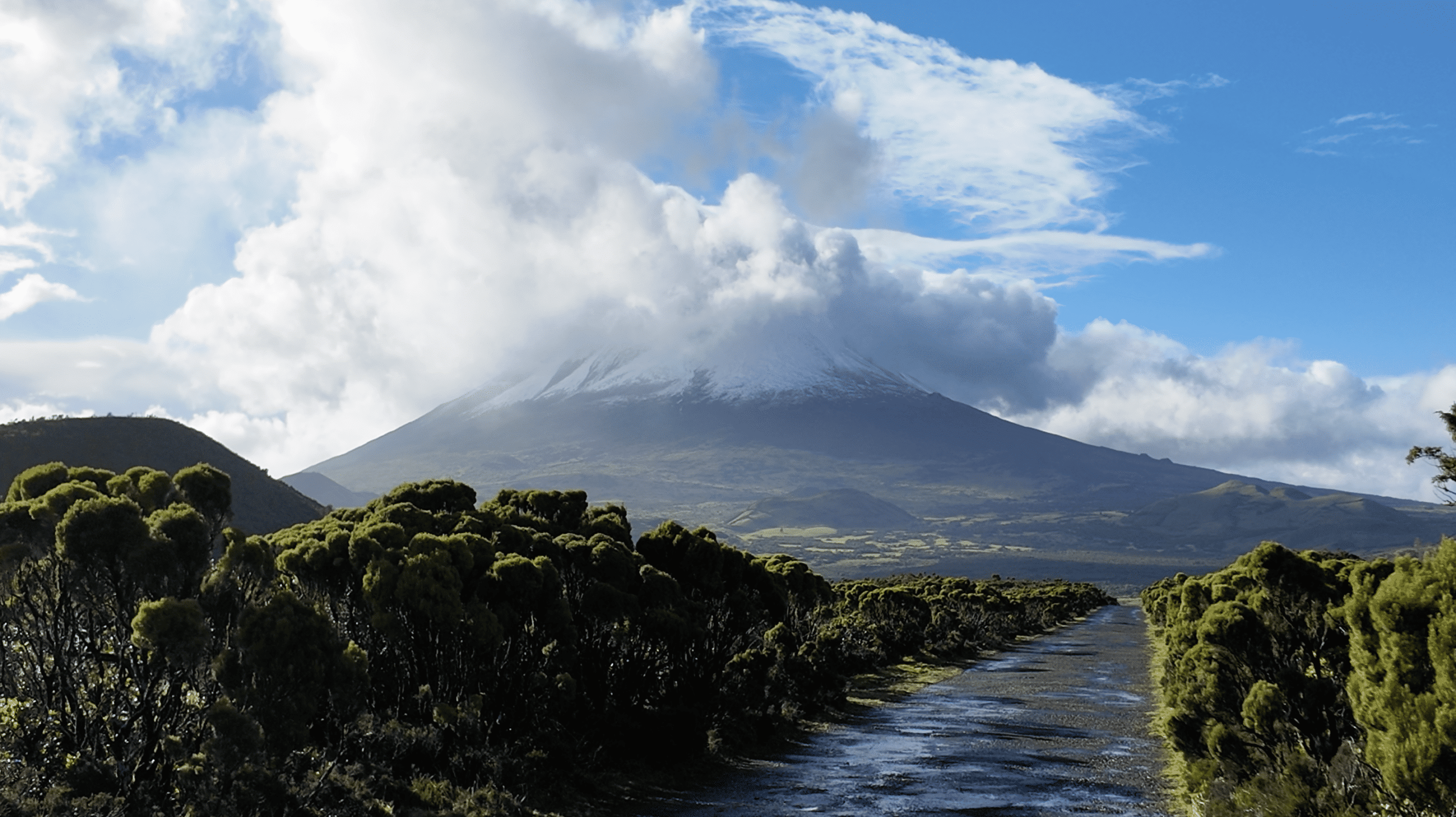
Mount Pico rising above the volcanic landscape of Pico Island, the highest mountain in Portugal.
Terceira: volcanic trails with history and culture
At a glance
Suggested stay: 2 to 3 days
Most famous trails: Mistérios Negros, Rocha do Chambre and Monte Brasil
Highlights: Native forest, volcanic domes, caldera landscapes, Angra do Heroísmo and island history
Difficulty: Beginner to intermediate, with more demanding sections on interior routes
Terceira offers a different balance again.
The island combines genuinely interesting hiking with one of the strongest cultural and historical identities in the Azores. This makes it especially rewarding for travelers who want their walking holiday to include more than landscapes alone.
The interior is shaped by volcanic formations, dense vegetation and highland pasture. Mistérios Negros is one of the island’s best-known walks, crossing a landscape of dark volcanic domes, forest and endemic vegetation. Nearby, Rocha do Chambre offers broader views over the interior and is particularly rewarding when the skies are clear.
Closer to Angra do Heroísmo, Monte Brasil creates an easier walking experience combining volcanic geography, Atlantic views and the history surrounding one of the archipelago’s most important cities.
Terceira’s strength is precisely that combination. You can spend the morning walking through a volcanic interior and the afternoon exploring streets, architecture and history in Angra.
If São Miguel is the best first island for pure variety, Terceira is one of the most interesting choices for travelers who want walking, history and island culture in equal measure.
São Jorge: dramatic descents to the fajãs
At a glance
Suggested stay: 2 to 3 days
Most famous trails: Fajã da Caldeira de Santo Cristo, Fajã dos Cubres, Pico da Esperança
Highlights: Coastal fajãs, steep cliffs, waterfalls, lagoons and rural island life
Difficulty: Intermediate to experienced
São Jorge is long, narrow and dramatically steep-sided, with some of the most distinctive coastal walking in the archipelago.
Its defining landscapes are the fajãs, small flat areas of fertile land lying beneath enormous ocean cliffs. Reaching them often involves substantial descents along old paths that once connected isolated communities with the island’s interior.
The classic route towards Fajã da Caldeira de Santo Cristo combines mountain landscapes, waterfalls, coastal scenery and one of the clearest examples of how generations of Azoreans adapted to the island’s geography.
São Jorge is particularly appealing if you enjoy walking that feels remote, physical and closely connected to traditional island landscapes.
Faial: green crater rims and the landscape of a recent eruption
At a glance
Suggested stay: 1 to 2 days
Most famous trails: Caldeira do Faial and Capelinhos
Highlights: Central crater, volcanic ash landscapes, the 1957 eruption site, Atlantic views and Horta
Difficulty: Beginner to intermediate
Faial is relatively compact, but its walking landscapes are remarkably contrasting.
The island’s central caldera is green and lush, while Capelinhos, created by the volcanic eruption of 1957–58, feels almost lunar. Dark ash and volcanic rock stretch towards the Atlantic beside the old lighthouse, creating one of the clearest places in the Azores to understand how recently these islands have been shaped by geological activity.
Faial also works particularly well as an addition to Pico because the two islands lie close together, making it relatively easy to combine the mountain and vineyards of Pico with Horta, the caldera and Capelinhos.
Flores: waterfalls and the wild western Atlantic
At a glance
Suggested stay: 2 to 3 days
Most famous trails: Fajã Grande coastal routes, Lajedo to Fajã Grande and crater-lake walks
Highlights: Waterfalls, steep green cliffs, crater lakes, remote villages and dramatic Atlantic scenery
Difficulty: Intermediate
Flores is one of the most visually dramatic islands in the Azores.
Its western coast is shaped by steep green cliffs, waterfalls and isolated settlements, while the island’s interior contains crater lakes and intensely green landscapes.
Walking here feels particularly remote. Routes around Fajã Grande and Fajãzinha combine waterfalls, coastal scenery and small communities at the western edge of the archipelago.
Flores is a great choice for walkers who prioritize nature, waterfalls and remoteness and are comfortable allowing some flexibility for Atlantic weather and transport logistics.
Santa Maria and Graciosa: quieter alternatives
Both Santa Maria and Graciosa have walking routes worth discovering, but for a first hiking-focused journey through the Azores we would normally prioritize the larger walking experiences above.
Santa Maria is drier and warmer than much of the archipelago, with distinctive coastal landscapes and a character that feels noticeably different from São Miguel.
Graciosa is gentler, quieter and more rural, with volcanic features and rolling landscapes rather than the dramatic mountain terrain found on islands such as Pico or São Jorge.
For travelers returning to the Azores or planning a longer island-hopping journey, both can be rewarding additions.
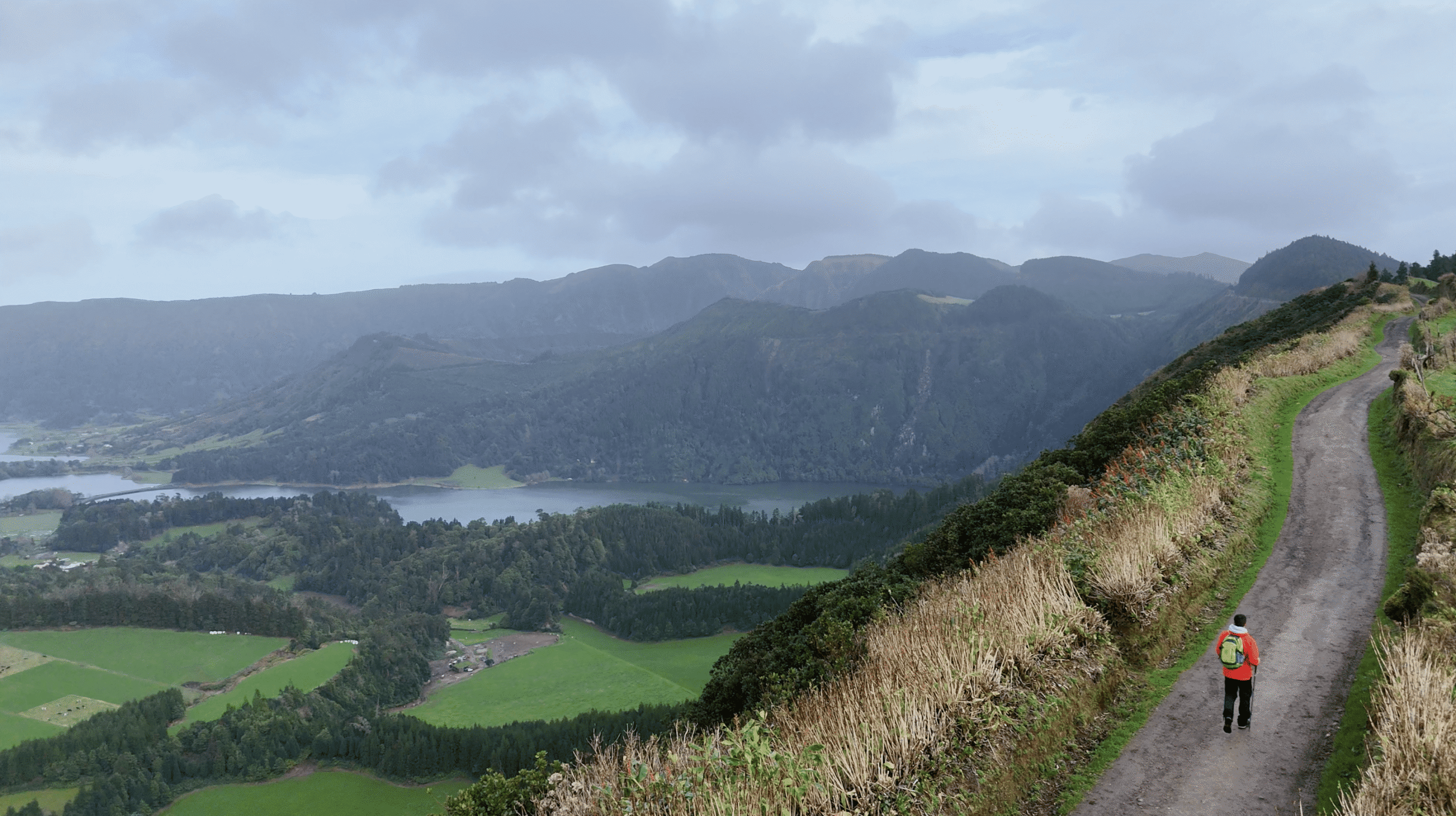
Walking the crater rim above Sete Cidades, with São Miguel’s volcanic landscape unfolding around the Blue and Green lakes.
Which island should you choose for your Azores walking holiday?
For a first walking trip of around one week, São Miguel would be our first choice. It offers the greatest variety of landscapes, good walking infrastructure and enough different routes to fill several days without complicated logistics.
If you have 8 to 10 days and want a broader experience, combine São Miguel and Pico. The contrast between the islands is one of the most rewarding ways to understand the Azores.
Choose Terceira if history and culture matter almost as much as the hiking.
Consider São Jorge if dramatic coastal descents and remote fajãs appeal to you.
Choose Flores for waterfalls, wild scenery and a more remote Atlantic experience.
And if you are already traveling to Pico, Faial is a particularly easy and worthwhile addition.
What are the walking trails in the Azores really like?
One of the pleasures of walking in the Azores is how quickly the terrain can change. A single day can take you from a wide volcanic track to a narrow forest path, across open pasture and down towards the Atlantic on trails cut into the hillside.
On São Miguel, many of the classic walks use well-defined paths and rural tracks, but conditions underfoot vary. Around the crater lakes you will encounter exposed ridges and volcanic terrain, while the wetter forests of the east can mean roots, stones and mud, particularly after rain. Old cobbled paths also survive in parts of the island.
Pico feels different again. Black basalt, volcanic gravel and exposed mountain terrain are much more present, particularly around the vineyards and on the slopes of Mount Pico.
This variety is part of what makes the Azores such an interesting walking destination, but it also means that distance alone is not a good measure of difficulty. A 10 km walk over wet, uneven volcanic terrain can feel considerably more demanding than the same distance on a straightforward path.
Are the trails well marked?
The Azores have an extensive network of official walking trails, and many of the best-known routes are waymarked. However, weather can change visibility quickly, particularly on crater rims and higher ground.
Trail conditions and access can also change because of weather, landslides or maintenance. For that reason, route planning should always take current local conditions into account rather than relying exclusively on an old GPX file or guidebook.
This is particularly relevant on a self-guided trip. Good navigation is important, but so is having the flexibility to change the day’s plan when conditions make another walk a better choice.
Take a glimpse at our guided walking tour in São Miguel island and Pico:
The best walks on São Miguel island
São Miguel has the greatest variety of walking in the Azores. Crater rims, volcanic lakes, waterfalls, geothermal valleys and tea plantations can all be experienced within a relatively small island, which means consecutive walking days can feel remarkably different.
These are some of the walks we would prioritize on a first walking trip to São Miguel.
Sete Cidades and the crater rim
Distance: Varies by route, typically 10–12 km
Walking time: Around 3–4 hours
Difficulty: Intermediate
Best for: Crater views, volcanic landscapes and a classic São Miguel experience
Sete Cidades is one of the landscapes that defines the Azores. The enormous volcanic caldera occupies the western end of São Miguel, with the Blue and Green lakes lying within its walls and the Atlantic visible beyond the surrounding ridges.
Walking the higher sections of the crater gives you a completely different perspective from simply stopping at the famous viewpoints. From the rim, you begin to understand the scale of the caldera and the volcanic forces that shaped this part of the island.
The walking is generally straightforward rather than technical, but the exposed position makes weather important. Cloud can arrive quickly and obscure the lakes completely, while wind can make the higher sections feel considerably more demanding.
This is one of those walks where flexibility pays off. On a clear day, it is difficult to think of a better introduction to walking in the Azores. If the crater is covered in cloud, there is little benefit in forcing it when another part of São Miguel may be enjoying completely different conditions.
Why we like it: Sete Cidades is more than a beautiful viewpoint when experienced on foot. Walking along the crater rim gives you time to appreciate the sheer scale of the volcanic landscape.
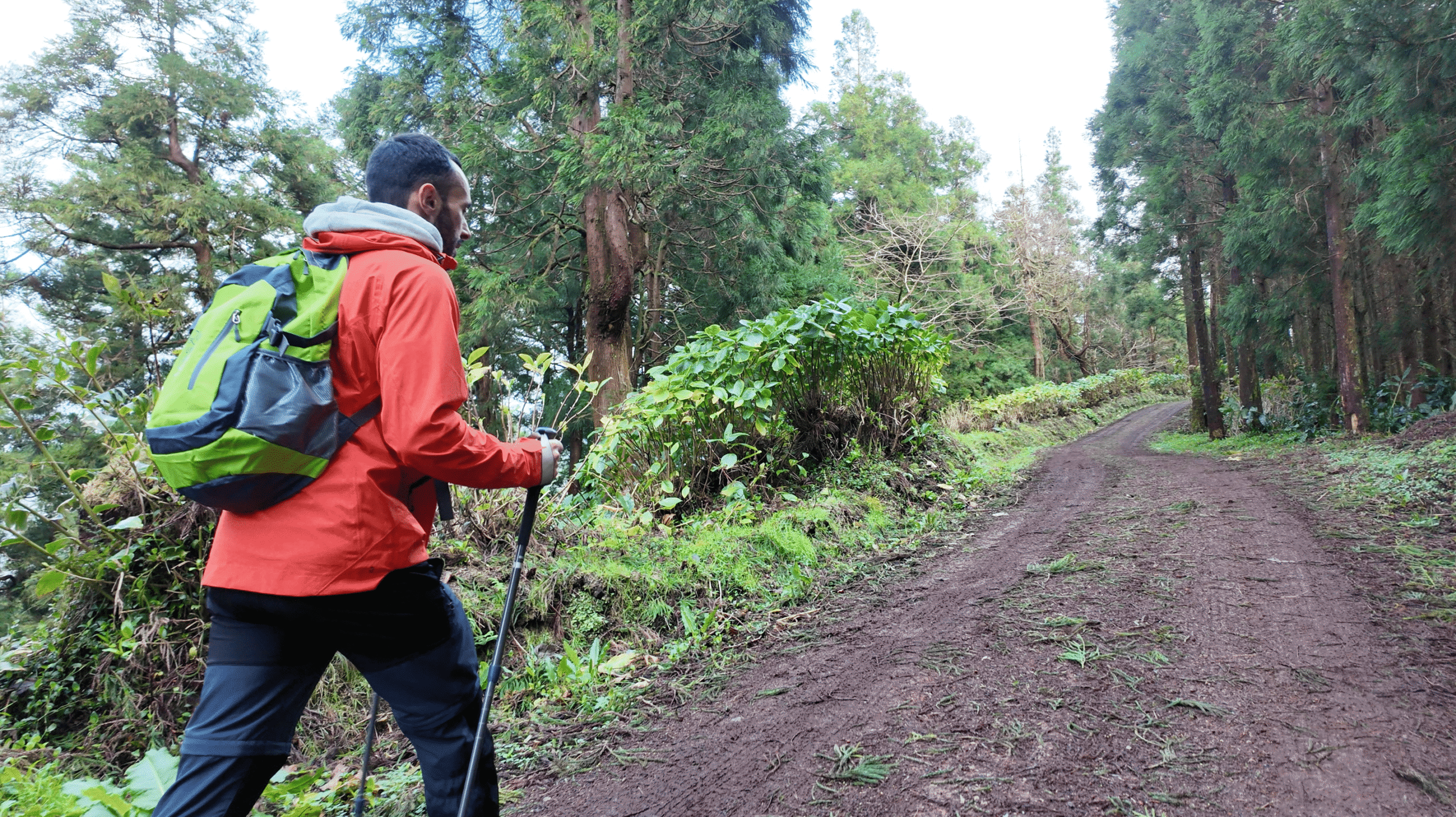
Exploring São Miguel’s walking trails
Lagoa do Fogo
Distance: Around 11 km, depending on the route
Walking time: Around 4 hours
Difficulty: Intermediate
Best for: A wilder crater landscape, mountain scenery and a feeling of remoteness
Lagoa do Fogo, or Fire Lake, occupies the central massif of São Miguel and feels noticeably wilder than Sete Cidades.
The lake sits inside the crater of the Água de Pau volcano, surrounded by steep green slopes and protected landscapes. There is much less development around the crater, which gives the walk a more remote character despite being relatively close to other parts of the island.
Depending on the route chosen, the approach passes through vegetation and more enclosed terrain before opening towards the lake and surrounding mountains. The change in landscape is one of the pleasures of the walk.
Again, weather plays a major role. Lagoa do Fogo is high enough to attract cloud even when the coast is clear, and wet conditions can make parts of the trail muddy and slippery.
Why we like it: Lagoa do Fogo shows a quieter side of São Miguel. There is less visual distraction here. The crater, lake and surrounding mountains are the experience.
Salto do Prego and Sanguinho
Distance: Around 4.5–5 km
Walking time: Around 2–3 hours
Difficulty: Intermediate
Best for: Forests, waterfalls and historic rural landscapes
The east of São Miguel feels very different from the open crater landscapes of Sete Cidades and Lagoa do Fogo.
From Faial da Terra, the trail towards Salto do Prego climbs through dense vegetation and follows old paths into the valley. The waterfall is the obvious destination, but the route itself is a large part of the experience.
A detour through Sanguinho, a small historic settlement that was gradually abandoned during the twentieth century, adds another dimension to the walk. Old houses, stone paths and vegetation offer a glimpse of the more isolated rural life that once characterized this part of São Miguel.
The distance is relatively modest, but climbs, steps, roots and potentially wet surfaces mean it should not be judged by kilometres alone.
Why we like it: This is one of the best walks for seeing how quickly São Miguel changes. Instead of huge volcanic views, the experience becomes intimate: forest, water, old paths and the sound of the valley around you.
Furnas and the geothermal valley
Distance: Varies according to the route
Walking time: Around 2–4 hours
Difficulty: Beginner to intermediate
Best for: Volcanic activity, culture, food and thermal experiences
Furnas is different from the other walks on this list because the attraction is not one dramatic trail. It is the combination of walking and geothermal landscape.
The Furnas caldera is one of the clearest places on São Miguel to experience the island’s continuing volcanic activity. Fumaroles, hot springs and steaming ground appear throughout the valley, while the lake and surrounding vegetation create a landscape that is both peaceful and geologically active.
Walking here also connects naturally with one of São Miguel’s best-known culinary traditions: Cozido das Furnas, a slow-cooked stew prepared underground using the natural heat of the volcanic ground.
This is a good place to give the legs an easier day between longer walks. Rather than concentrating on distance or elevation, take time to explore the valley and geothermal areas, enjoy lunch and finish with a soak in one of Furnas’ thermal pools.
Why we like it: Furnas is a good example of why a walking holiday should not be only about collecting kilometres. Here, geology, food, landscape and local traditions all become part of the walk.
Gorreana and São Miguel’s tea country
Distance: Around 3–4 km for the classic plantation walk
Walking time: Around 1–2 hours
Difficulty: Beginner
Best for: Tea plantations, agricultural landscapes and a gentler walking day
The landscape around Gorreana offers another side of São Miguel.
Rows of tea plants cover the rolling hills above the northern coast, creating a cultivated landscape unlike the volcanic craters and forests elsewhere on the island. Walking through the plantation provides an opportunity to understand a part of São Miguel’s agricultural history while enjoying a relatively easy route.
This is not a hike you choose because of its physical challenge. It works because of its setting and because it can be combined naturally with other experiences on the north side of the island.
Take time to visit the plantation rather than treating the walk as another route to complete. The experience makes much more sense when the landscape, history and tea itself are enjoyed together.
Why we like it: Not every memorable walking day needs a summit or a long trail. Gorreana is a good reminder that walking slowly through a working landscape can tell you as much about an island as its biggest viewpoints.
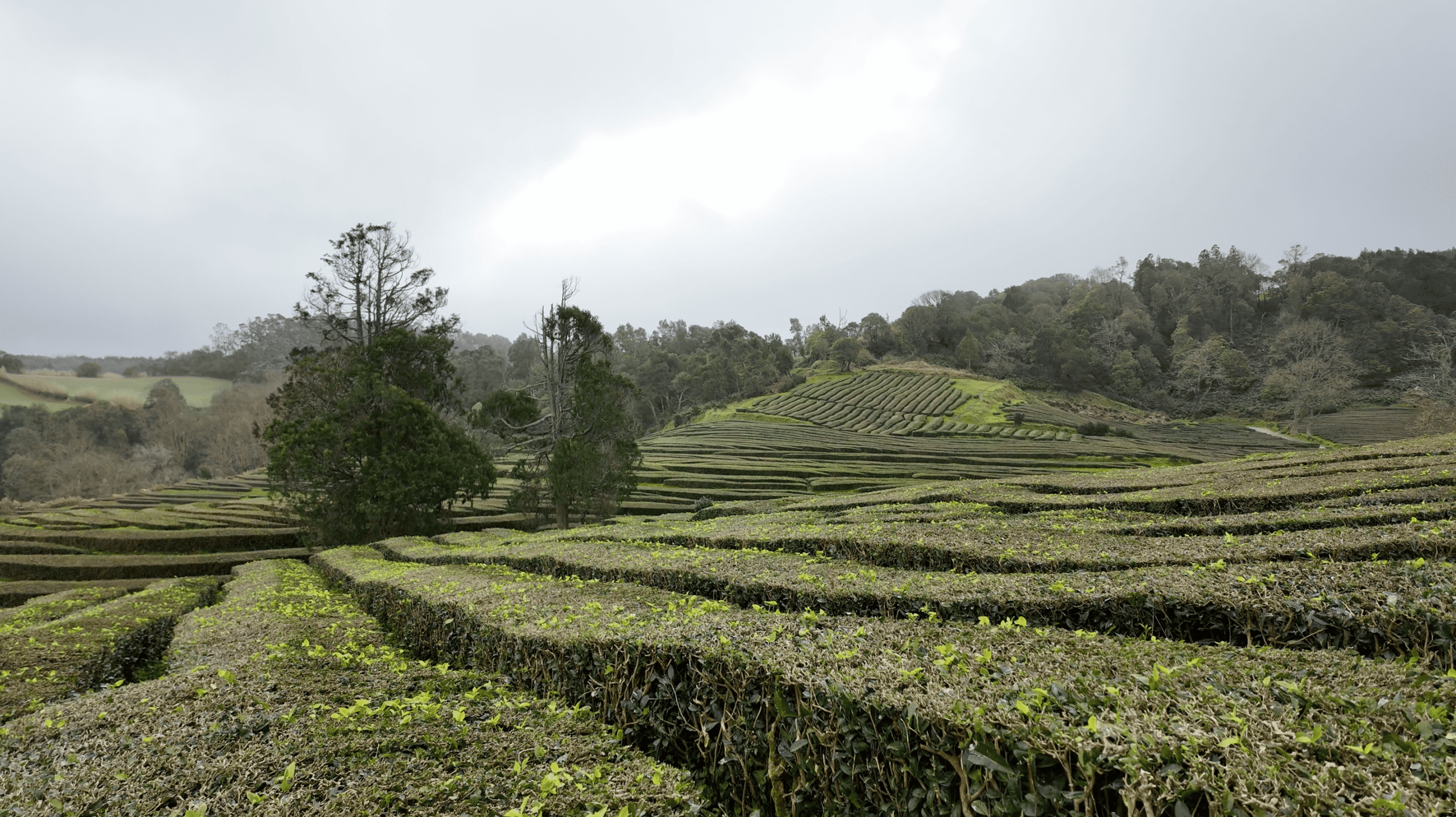
Walking by gorreana tea plantation in São Miguel island
Nordeste and the quieter east
Distance: Depends on the chosen trail
Walking time: Half-day options are ideal
Difficulty: Beginner to intermediate
Best for: Forests, waterfalls, rural landscapes and a quieter São Miguel
Travel east towards Nordeste and São Miguel becomes quieter.
The landscape is deeply green, with forests, streams, waterfalls, small agricultural communities and spectacular viewpoints above the Atlantic. There are several walking possibilities rather than one route that dominates the area, which makes Nordeste particularly good for travelers with enough time to explore beyond the island’s headline sights.
This is also an area where walking gives you something that driving between viewpoints cannot. Rural paths and forest trails slow the landscape down and reveal a more peaceful side of São Miguel.
Why we like it: After Sete Cidades, Lagoa do Fogo and Furnas, the east makes São Miguel feel like a much larger island. It is worth leaving space in the itinerary for places that are not simply the most photographed.
The best walks on Pico island
Pico changes the character of an Azores walking holiday completely.
The landscape is darker, more exposed and visibly volcanic. Mount Pico dominates the skyline, but some of the island’s most interesting walks are actually found away from the summit, among vineyards, lava fields, lakes and the Atlantic coast.
If São Miguel demonstrates the variety of walking in the Azores, Pico demonstrates its volcanic identity.
Climbing Mount Pico
Distance: Around 7–8 km return
Walking time: Approximately 6–8 hours
Difficulty: Experienced
Best for: A serious mountain day and reaching the highest point in Portugal
At 2,351 metres, Mount Pico is the highest mountain in Portugal and the most demanding walking objective in the Azores.
The numbers can be misleading. The overall distance is not particularly long, but the ascent gains a large amount of elevation over steep, rough volcanic terrain. The descent requires concentration too, particularly when surfaces are loose or wet.
Weather is another major consideration. Conditions around the summit can be completely different from those at sea level, and cloud, wind and rapidly changing visibility are part of hiking on an isolated Atlantic volcano.
For those with the fitness, experience and appropriate conditions, reaching the summit provides an extraordinary perspective over Pico and the surrounding Atlantic, with neighbouring islands visible when the skies are clear.
But Mount Pico should never be treated as an obligatory part of visiting the island. There is excellent walking elsewhere, and choosing not to climb the mountain does not mean missing the essence of Pico.
Why we like it: Pico is a proper mountain day. The satisfaction comes not simply from standing at Portugal’s highest point, but from experiencing the volcanic terrain all the way from the lower slopes towards the summit.
Walking through the vineyards of Criação Velha
Distance: Around 7 km
Walking time: Around 2–3 hours
Difficulty: Beginner to intermediate
Best for: Volcanic landscapes, wine, culture and an easier day on Pico
This is one of the walks we would not miss on Pico.
The vineyard landscape around Criação Velha is unlike conventional European wine country. Instead of long green rows of vines, the ground is divided into small plots by an extraordinary network of dry-stone basalt walls.
These walls protect the vines from Atlantic winds and salt while the dark volcanic stone absorbs and releases heat. The result is both a working agricultural system and one of Pico’s most distinctive cultural landscapes.
Walking allows you to see the details that are easily missed from the road: the texture of the lava, the scale of the stonework and the relationship between the vineyards, ocean and volcano.
Part of Pico’s vineyard landscape is recognized by UNESCO, reflecting the remarkable way generations of islanders adapted viticulture to an apparently inhospitable volcanic environment.
Why we like it: This is Pico in one walk: volcano, Atlantic, wine and human ingenuity. It is also an excellent contrast to the physical challenge of Mount Pico.
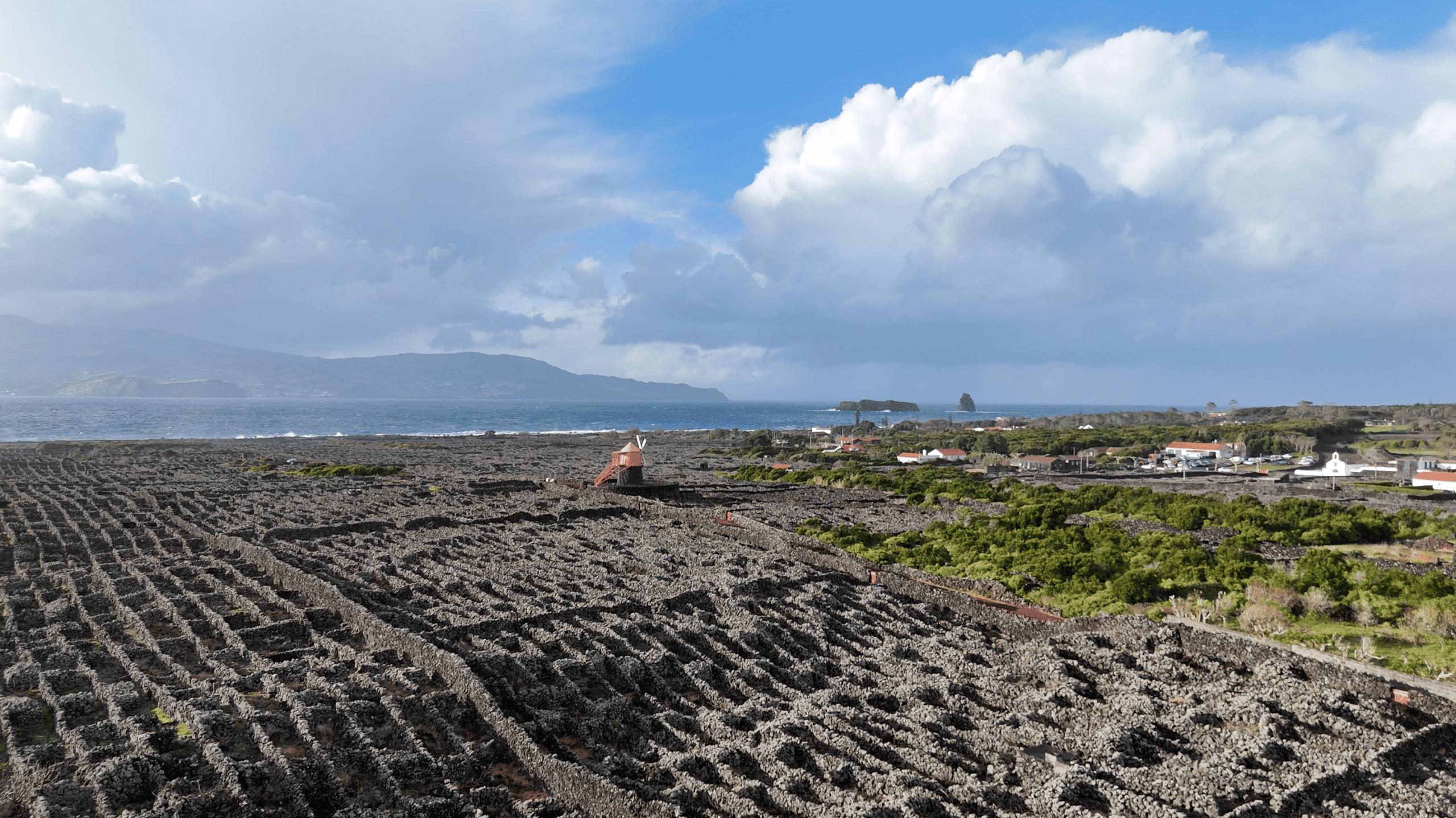
Criação Velha vineyards in Pico island
Caminho das Lagoas
Distance: Around 22 km for the complete route
Walking time: Around 6–7 hours
Difficulty: Intermediate to experienced
Best for: Highland landscapes, volcanic lakes and a long walking day
Pico’s interior is easy to overlook when the mountain and vineyards attract so much attention.
The Caminho das Lagoas reveals another landscape entirely. The route crosses the island’s high plateau, passing a succession of volcanic lakes, open pasture and broad views across the interior.
It feels spacious and remote, particularly compared with the cultivated coastal areas. Cloud and wind can change the atmosphere quickly, and the length makes this a substantially more serious day than the vineyard walks.
It is a particularly good choice for walkers who want distance rather than steep mountain climbing.
Why we like it: Caminho das Lagoas shows that Pico’s high country is much more than the summit. The openness, lakes and changing Atlantic light give this walk a character of its own.
Coastal walking through Pico’s lava landscapes
Distance: Varies by route
Walking time: Around 2–4 hours
Difficulty: Beginner to intermediate
Best for: Lava formations, Atlantic views and quieter walking
Pico’s coast is another place where the island’s volcanic origins are impossible to ignore.
Black lava meets the Atlantic, old stone paths connect small settlements and vineyards appear in places where agriculture initially seems improbable. Routes around areas such as Prainha and other sections of the coast provide gentler alternatives to the mountain while retaining Pico’s distinctive character.
These walks are particularly useful when conditions higher on the island are poor. A mountain covered in cloud does not necessarily mean a lost walking day. The coast can offer completely different weather and visibility.
That flexibility is an important part of walking in the Azores.
Why we like it: On Pico, you don’t need to climb high to feel the volcano. Along the coast, lava, ocean and human settlement tell the island’s story just as clearly.
If we had to choose just one walk on each island
On São Miguel, we would choose Sete Cidades on a clear day. It combines accessible walking with one of the most complete volcanic landscapes in the archipelago.
On Pico, the choice depends on the walker. For experienced hikers looking for a challenge, Mount Pico is difficult to ignore. For travelers more interested in understanding the island itself, we would choose the Criação Velha vineyards.
And this distinction is useful when planning the trip. São Miguel offers enough variety to build an entire walking holiday around one island, which is why it works so well for a self-guided walking tour in the Azores. Pico adds something completely different, making the combination of São Miguel and Pico on a guided walking tour particularly rewarding for travelers who want to experience two contrasting faces of the archipelago.
Finding walking trails on the other Azores islands
While São Miguel and Pico are the main focus of our walking journeys in the Azores, the archipelago has an extensive network of marked trails across its other islands. Terceira, São Jorge, Faial, Flores, Santa Maria and Graciosa each offer their own landscapes, from volcanic highlands and coastal paths to waterfalls, crater lakes and the distinctive fajãs found beneath São Jorge’s cliffs.
On Terceira, trails such as Mistérios Negros and Rocha do Chambre explore the island’s volcanic interior and native vegetation. São Jorge is particularly rewarding for walkers drawn to steep coastal landscapes, with routes descending towards fajãs such as Fajã da Caldeira de Santo Cristo. On Faial, walks around the central caldera contrast with the stark volcanic landscape of Capelinhos, while Flores is known for waterfalls, crater lakes and dramatic Atlantic scenery.
For walkers planning to explore beyond São Miguel and Pico, we recommend using the official Azores Trails website to research individual routes. It allows you to explore trails by island and check practical information such as distance, duration, difficulty and elevation.
Explore the official Azores Trails network
It is also worth checking the official trail information shortly before setting out. Weather, maintenance and local conditions can affect access in the Azores, and a route that was open when you planned your trip may not necessarily be the best choice on the day.
One of the advantages of walking in the Azores is precisely this variety. You do not need to visit every island on a first trip. São Miguel alone can easily fill a week of walking, while combining São Miguel and Pico creates a more varied journey through two very different volcanic landscapes. The other islands give returning visitors plenty of reasons to come back.
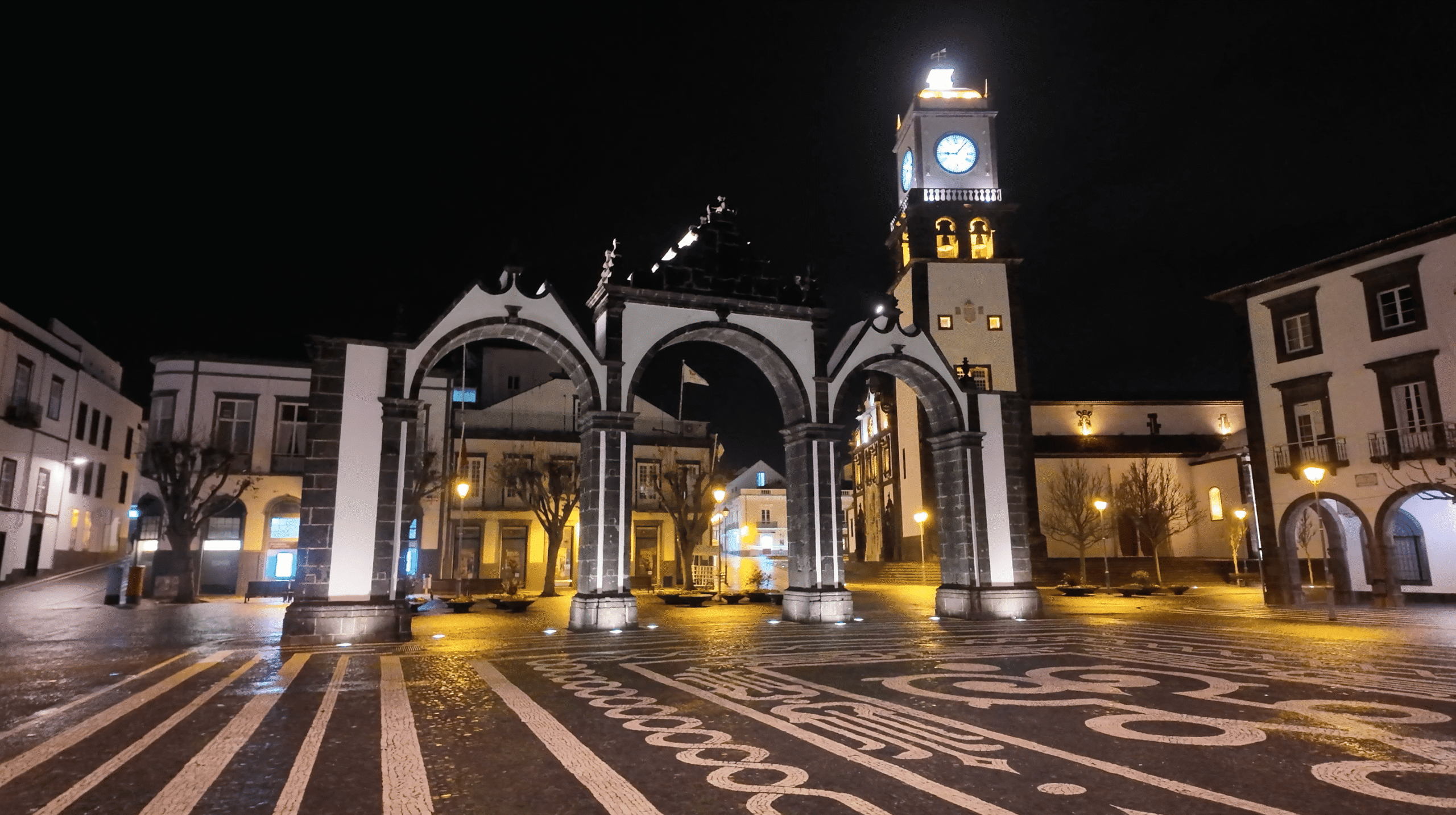
Portas da Cidade, in Ponta Delgada, by night
How difficult is walking in the Azores?
You do not need to be an experienced mountaineer to enjoy walking in the Azores. Many of the islands’ most rewarding routes are accessible to active travelers who are comfortable walking for several hours.
What can make the walking more challenging is the combination of elevation, uneven terrain, humidity, mud and consecutive days on foot.
São Miguel offers perhaps the widest choice of difficulty levels. There are relatively gentle walks through geothermal and agricultural landscapes as well as longer crater, forest and mountain routes.
Pico raises the level considerably if you include the ascent of Mount Pico. This should be considered separately from the island’s easier coastal and vineyard walks. Reaching Portugal’s highest point requires considerably more fitness, confidence on steep volcanic terrain and suitable weather.
For a multi-day walking holiday, we think consistency matters more than speed. Being comfortable walking several days in succession is more useful than being able to complete one particularly long hike – click to explore the walking tour in Portugal for your level.
When is the best time for walking in the Azores?
The Azores can be walked throughout much of the year, but there is no single month that is perfect for everyone.
The islands have a mild Atlantic climate, which means temperatures are generally moderate. The more important consideration for walkers is variability. Sunshine, cloud, wind and rain can all occur within a relatively short period, and conditions at sea level may be completely different from those on an exposed crater rim.
Spring
Spring brings increasingly long days, green landscapes and generally comfortable temperatures for walking. It is a particularly attractive period if you prefer cooler conditions and quieter trails.
Summer
Summer offers longer daylight hours and generally warmer conditions. It is also the busiest period and, while temperatures remain moderate compared with mainland Portugal, humidity and sun exposure can make longer walks feel warmer than the thermometer suggests.
Hydrangeas are also one of the defining sights of the Azorean summer, bringing colour to roadsides and rural landscapes across several islands.
Autumn
Early autumn can be an excellent time for walking, with mild temperatures and fewer visitors than during peak summer. As the season progresses, however, unsettled Atlantic weather becomes increasingly relevant when planning higher or more exposed routes.
Winter
Winter walking is possible, particularly at lower elevations, but greater flexibility is useful. Rain, wind, cloud and shorter daylight hours can affect which trails make sense on a particular day.
So, when would we choose?
For a dedicated walking holiday, late spring to early autumn offers the easiest combination of daylight, temperature and trail choice.
But we would not choose a month based on climate averages alone. One of the secrets to walking well in the Azores is accepting that the weather is part of the landscape and keeping enough flexibility to choose the right walk for the conditions.
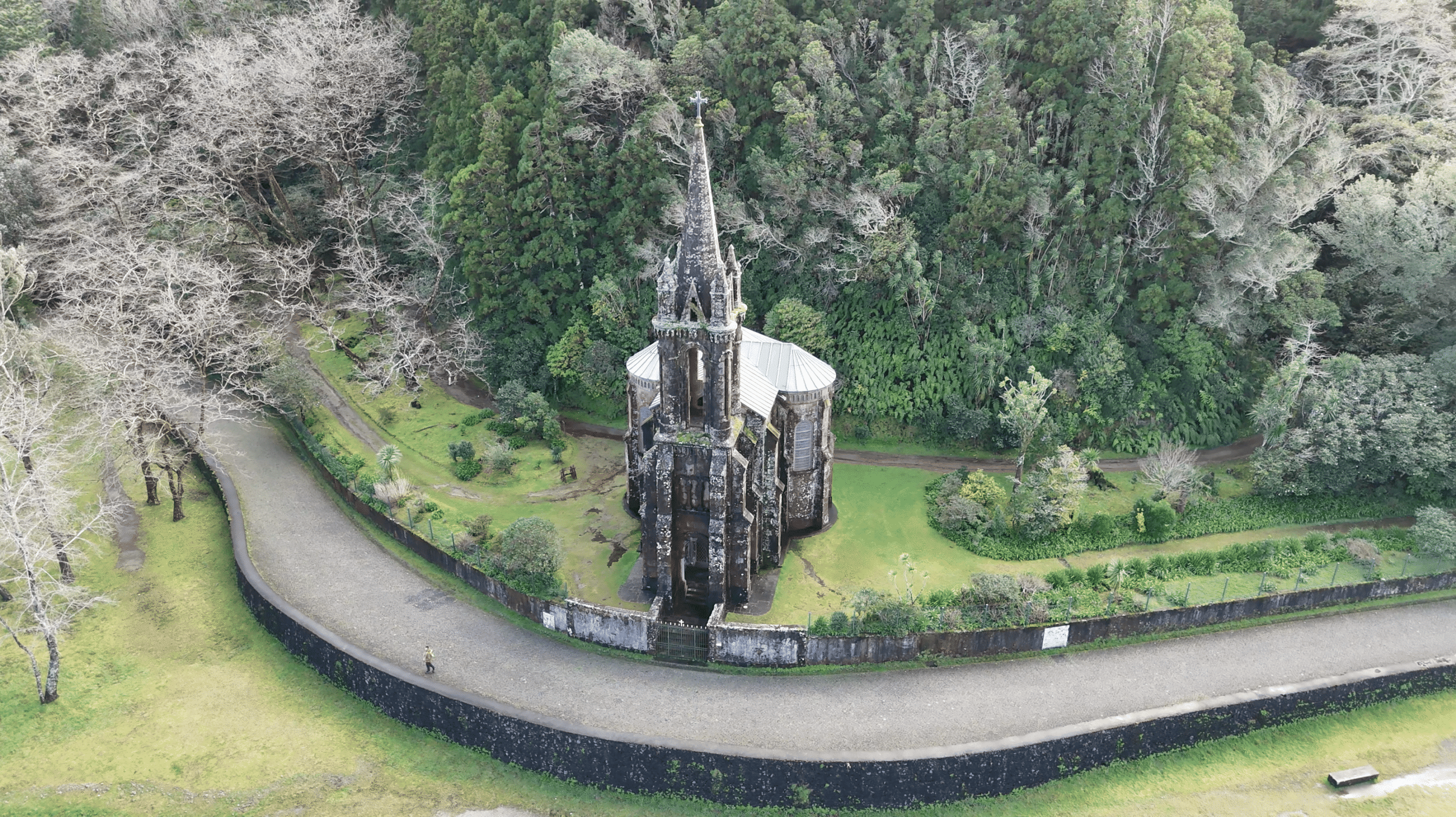
Nossa Senhora das Vitórias chapel rising from the lush landscape of Furnas, one of São Miguel’s most distinctive landmarks along the shores of the volcanic lake.
Guided or self-guided walking in the Azores?
Once you have decided to explore the Azores on foot, one of the biggest choices is whether to travel guided or self-guided. Both work particularly well here, but they create quite different experiences.
The right choice depends on how independently you like to travel, how much local interpretation you want along the way, and whether you prefer to concentrate on one island or combine several.
Self-guided walking: freedom to explore São Miguel at your own pace
São Miguel is particularly well suited to a self-guided walking holiday. The island offers enough variety for a full week of walking, without the additional logistics of moving between islands.
Self-guided does not mean organizing everything yourself. On a well-designed trip, the itinerary, accommodation, selected transfers, luggage transportation and routes are prepared in advance, while you retain the freedom to walk independently and enjoy each day at your own rhythm.
That independence works especially well in São Miguel. You can take your time along the crater landscapes of Sete Cidades, stop for photographs when you want, linger over lunch or simply enjoy the trail without having to follow the pace of a group.
It also gives you a degree of flexibility that is valuable in the Azores. Weather can be remarkably local, and having good route information and support on the ground makes it easier to experience the island confidently.
Our self-guided walking tour in São Miguel is designed around this balance: the freedom of independent walking with the essential logistics and local support already taken care of.
Self-guided is a good choice if you: enjoy walking independently, value flexibility and privacy, are comfortable following routes and would like to explore São Miguel in depth rather than moving between several islands.
Guided walking: local knowledge and a multi-island experience
A guided journey offers something different.
Having an experienced guide alongside you is not simply about knowing which path to follow. A good guide adds context to the landscapes you are walking through, helps interpret local history and traditions, and can adapt the experience according to the group, conditions and weather.
This becomes particularly valuable when combining islands.
São Miguel and Pico, for example, are remarkably different walking destinations. Moving between them adds transfers, inter-island travel and more complex logistics, but it also creates a much richer picture of the archipelago: São Miguel’s green crater landscapes and geothermal valleys followed by Pico’s black volcanic terrain, historic vineyards and mountain environment.
Our guided walking tour in São Miguel and Pico brings those two experiences together, with the journey supported by our team and local knowledge throughout.
Guided is a good choice if you: want to understand more about the places you walk through, enjoy sharing the experience with other travelers, prefer having the daily logistics managed for you, or want to combine São Miguel and Pico in one walking journey.
Which should you choose?
There is no better format overall. It comes down to the kind of experience you want.
If your priority is independence and discovering São Miguel at your own rhythm, we would choose self-guided. The island has more than enough variety to reward a week of exploration.
If you want a deeper multi-island journey with local guidance throughout, combining São Miguel and Pico on a guided tour makes more sense. You gain not only a guide, but also the contrast between two very different islands without having to manage all the logistics yourself.
And if you are still deciding, start by exploring all our walking tours in the Azores. There you can compare the different ways we experience the islands on foot and choose the journey that best matches your walking style.
Take a glimpse at our self-.guided walking tour in São Miguel island
Our perfect walking day in the Azores
If we had to choose one day that captures what we love about walking in the Azores, we would spend it on São Miguel.
We would start early at Sete Cidades, ideally while the morning light is still moving across the crater and before the best-known viewpoints become busy. Walking high above the Blue and Green lakes gives you a sense of the scale of the volcanic landscape that you simply do not get from stopping at a viewpoint for a few minutes.
After the walk, we would slow things down. There is no need to turn a day in the Azores into a race between attractions. We would stop for coffee, cross the island towards Furnas and make time for a proper lunch, preferably a traditional Cozido das Furnas, slowly cooked underground using the natural heat of the volcanic ground.
The afternoon would be deliberately easier. A walk through Furnas reveals another side of São Miguel, with steaming fumaroles, hot springs and lush vegetation replacing the open crater landscapes of the morning. And after several days of walking, there are few better ways to finish than soaking in the island’s thermal waters.
What makes this our perfect day is not the number of kilometres walked or the number of places visited. It is the contrast between them: a great trail, an extraordinary landscape, local food, volcanic culture and enough time to actually enjoy where you are.
That is how we like to experience the Azores, and how we think a walking journey should feel.
Why walk the Azores with Live Love Hike?
The Azores are the kind of destination where local knowledge can make a good walking holiday considerably better. Weather changes quickly, conditions can be completely different from one side of an island to another, and some of the best experiences are the places, meals and small decisions you would rarely find by simply following a list of trails.
Live Love Hike is a Portuguese company, with a local team that knows the country we walk in. In the Azores, that connection goes even further: we have guides living on São Miguel, with first-hand knowledge of the island, its trails and the realities of exploring it throughout the year.
That means having someone nearby who can do more than point you in the right direction. Our team is there to be helpful and accommodating, to share insider recommendations, answer questions and help you make the most of your time on the islands. Sometimes it is knowing which walk makes more sense given the weather that morning. Sometimes it is a restaurant recommendation, a quieter place worth stopping at, or simply advice from someone who knows São Miguel as home.
It is this human side of the experience that matters to us. We want our guests to feel that there are real people on the ground looking after their journey, whether they are walking alongside one of our guides or exploring more independently.
And rather than simply taking our word for it, you can read what previous travelers say about their experiences with our team, guides and support in our Live Love Hike guest reviews.
For us, local expertise is not about knowing more facts about a destination. It is about knowing how to help you experience it better.
Discover Portugal one step at a time
The Azores show just how varied walking in Portugal can be. Volcanic crater rims, Atlantic coastlines, forest trails and mountain landscapes are only one part of what the country has to offer on foot.
From the islands to the mainland, our Portuguese team designs walking journeys that bring together great trails, remarkable landscapes, local culture and the people who make each place distinctive.
If the Azores have inspired your next adventure, start exploring our walking tours in Portugal, or discover more of the country through our walking destinations in Portugal.
Wherever you choose to walk, take your time. The best journeys are about much more than reaching the end of the trail.